NFTs have a BIG problem
Our interests are [not] aligned.

This will probably upset many people. But I think of substack as a place where we can discuss inconvenient truths, and its better to have this conversation earlier rather than later, especially since many in the NFT community are lovely people.
Those of you who have been reading my “Win Conditions” series will know that I’ve been trying to tease out the different directions and nuances that ‘big’ NFT projects have been adopting towards success. There is, however, one main problem that undergirds all NFT projects and communities.
Misaligned interests
That is misaligned interests between the team and community. What benefits the project or team does not necessarily benefit its holders.1
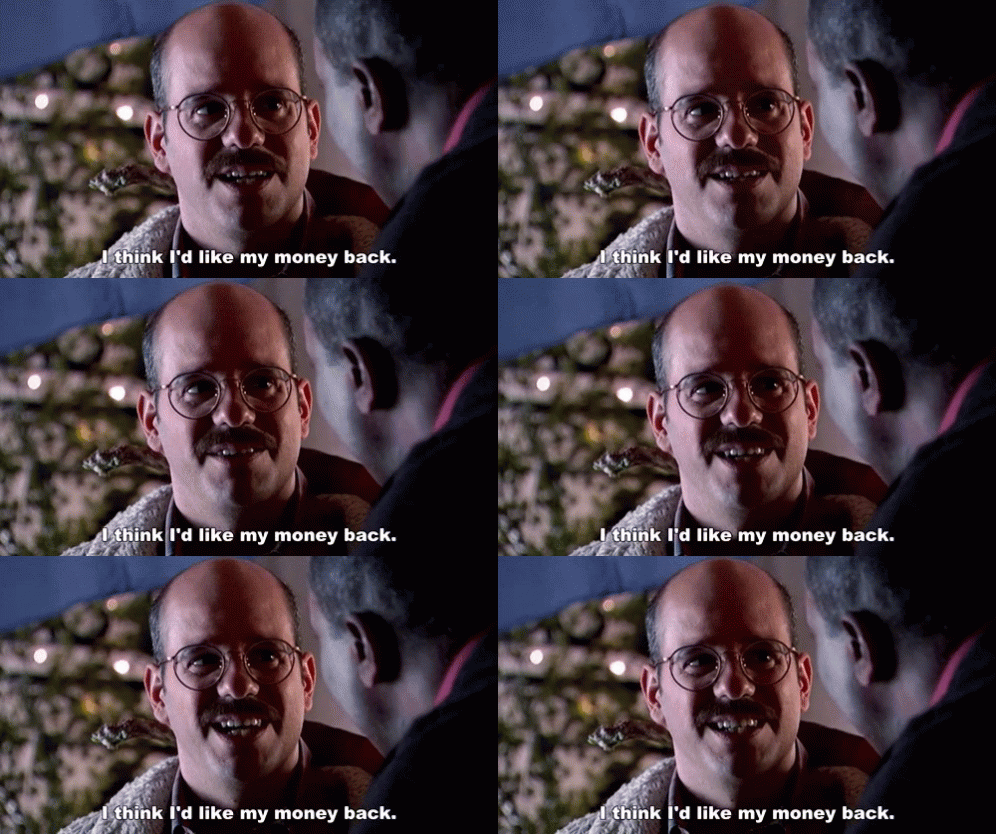
Its all about the money, money money
I’ve previously alluded to this in my article on RTFKT, but NFT holders are in a bit of an awkward position. Although the crypto space is rife with talk about “community” and “WAGMI” (We Are All Gonna Make It), NFT holders are ultimately not considered as shareholders of a company.
This means that any revenue or profits that the project accrues will not, and cannot be distributed to its holders. All-time high volume and royalties fills the project’s coffers, but not the holders’ wallets. To do so would render the NFT as a security instrument under the Howey test, and would be subject to US security laws and the [evil] SEC (Securities Exchange Commission).
We’ve seen NFTs come under such scrutiny as unregistered securities multiple times, which leads to an inevitable Opensea delisting. Examples include the DAO Turtles NFT collection and the Gambling Apes NFT collection, both of which promised its holders a share of the project’s revenues.
Thus, at best, NFT holders’ interests are aligned with the project insofar as greater publicity and revenue results in a higher floor price, which the holders can theoretically sell their NFTs at and potentially earn a profit. This is why you see holders urge each other to “diamond hand” their NFTs and why sellers are incessantly shamed in the community. The incentives for holding NFTs are inevitably skewed to the short term as there is no guarantee that the long term success of a NFT collection translates into benefits for the average holder.
Value creation vs Dilution
Misaligned objectives can be seen through the ‘dilution’ of the brand.
To be fair to project teams, many of them have tried to create ‘value’ for their community through a variety of means. In 2021, we saw the rise of NFTs with staking mechanics - simply hold or stake your NFT and you will be rewarded with fungible tokens that can be sold for profit.
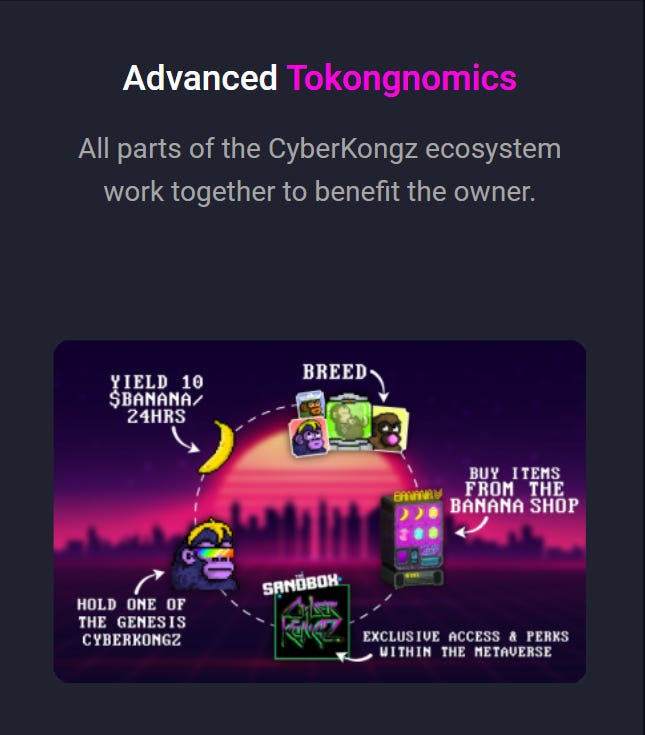
To my knowledge, the Cyberkongz NFT project was the pioneer of such staking mechanics through use of the $BANANA token for genesis cyberkongz
In the same vein, projects provided airdrops to its holders to provide them with assets that could be sold for profit while allowing them to keep their original NFT. The examples are numerous - Doodles had dooplicators, Moonbirds had Oddities, Bored Apes had MAYCs etc.
The problem with these measures is that the market interest in the original collection (and to a certain extent, the brand image) is often diluted as a result. There is only so many money/interest swirling in the NFT market. As an example, the potential draw of owning a BAYC is diminished when there is a cheaper entry into the Yuga Labs ecosystem through a MAYC. In many instances, the price appreciation (in percentage terms) of the lower-cost NFTs also outpaces the original collection.
This problem is somewhat diminished during a bull market, where everything is up only and holders are likely to benefit from an increase in floor prices. During a bear market, however, where there is less interest and capital to go around, holders of a ‘premium’ NFT collection within a project’s ecosystem are likely to be upset if they view themselves as being diluted by lower-cost, cheaper collections without any revenue or profit-sharing benefits.
Take the example of Doodles, which announced earlier this year that Pharrell Williams was joining as Chief Brand Officer, and (more recently) that it raised $54 million of equity funding from Seven Seven Six, Acrew Capital, FTX Ventures and 10T Holdings. Doodles has embarked on a plan to “expand in music and gaming” to introduce people to the Doodles brand. To this end, they have announced “Doodles 2”, which is “a mass-market, identify-focused NFT” that lets collectors “express themselves with wearables, animated characters, fully-licensed music and more”.
What about collectors of the original Doodles collection? The Doodles website states this:
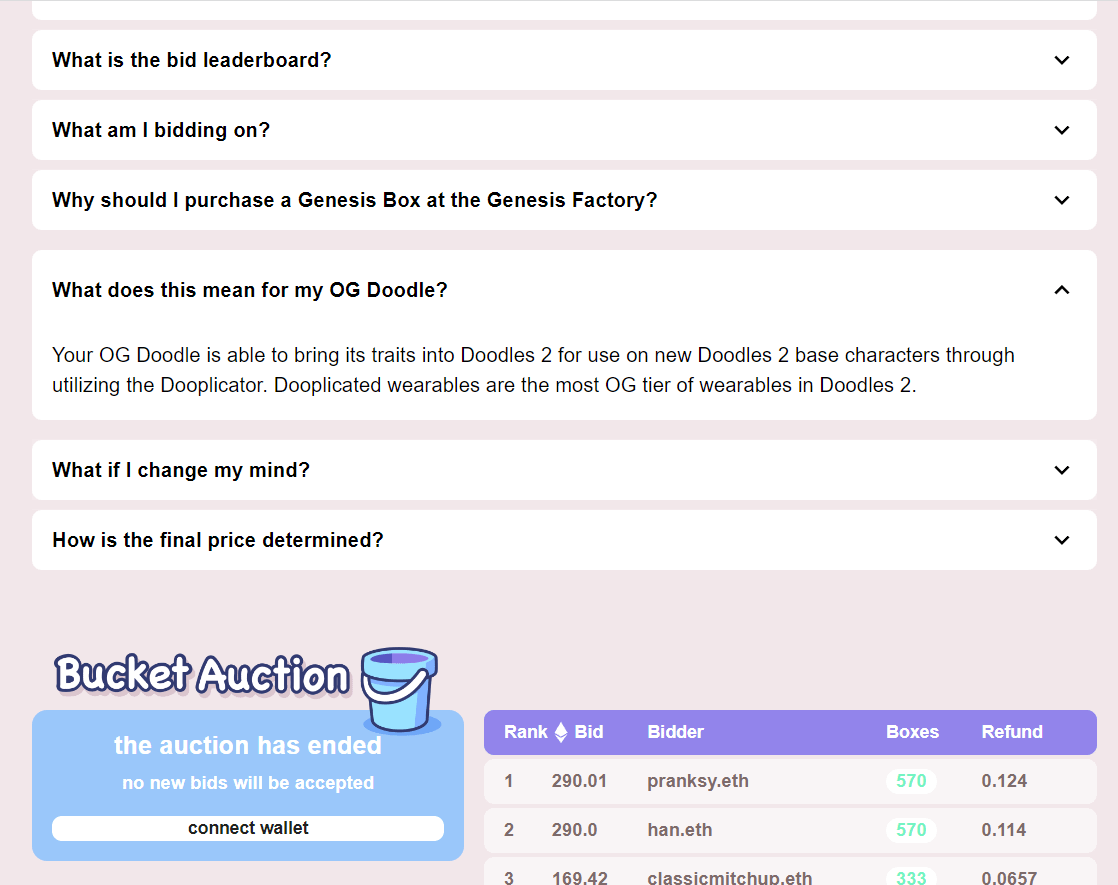
Unless revenue and interest in Doodles 2 flows into the original doodle collection (thereby increasing its floor price), OR the OG dooplicated wearables command a significant premium, collectors of the original collection are unable to benefit from any success that Doodles commands through Doodles 2.
In contrast, as the VCs own equity, they will directly benefit from any increased revenue.
If one wanted to adopt a cynical view, royalties from the original collection are being used to promote a collection that is unlikely to benefit the original holders (although Doodles is certainly not the only culprit).
Now what?
What can holders do in such a situation, and is there a win-win solution? That’s something that I will address in a separate article. In the meantime, feel free to share your thoughts below, and to subscribe so you don’t miss any follow-ups.
Stay frosty.
Note my distinction between the incentives of a project vs its team, certain teams have tied their compensation to the long term success of the project (see Chiru Labs’ statements on their compensation plan for instance). However, most teams pay themselves handsomely from the project proceeds and leave it for death.